
Change Management Consulting & Leadership Development | Industrial • Manufacturing • Energy
CHANGE THAT STICKS.
Whatever you're trying to improve, something has to change. It might be a process, a system, a skill, or the way your crews lead and respond when something goes wrong. Isomerics helps you find the right change and make it hold on EVERY shift.
LET'S TALK

The first call with Isomerics is never a sales call disguised as "discovery". It's a real diagnosis.
You've probably sat through your fair share of time-wasting discovery calls that ended with a brochure and a follow-up email. Your first call with Isomerics is a working session with the consultant who would lead the work. You'll walk away with something useful, even if we never work together.
1. Tell us what you're seeing.
Describe the problem. Maybe something isn't working. Maybe something needs to work better. Or maybe you know a change is coming and want to get ahead of it. Your first conversation with Isomerics is about understanding what's happening—not selling you a predetermined solution.
2. We dig into what's feeding it.
We use a structured evaluation to look across process, systems, capability, and culture for the causes you might not see yet.
3. You leave with something you can use.
Within two business days, you get a short written summary and two or three steps you can take on your own. What happens after that is up to you.
[45] minutes • Phone or video • No cost
ISOMERICS IN 30 SECONDS
WHAT WE DO — AND WHY IT'S DIFFERENT
We don't start with the solution.
What looks like a leadership problem might be a process problem. What looks like resistance might be a system getting in the way. And what looks like a training problem might have nothing to do with training. That's why we look at the whole picture before deciding what needs to change.
People don't change because a policy tells them to. They change when the environment around them makes the new behavior easier than the old one. That's what we build.
WHERE WE LOOK
DIRECTION. PROCESS. SYSTEMS.
CAPABILITY. CULTURE.
Improvement initiatives usually stall in one of five places: what your operation is aiming at and who owns the call, how the work is designed, the tools that support it, what your people are able to do, and what drives behavior when nobody's watching. When improvement doesn't stick, the cause is almost always in one or more of them. Before deciding what needs to change, we look at all five parts of your operation. The challenge is that the source of the problem isn't always where the symptoms show up. A skipped step on night shift can trace back to a priority, a procedure, a missing checklist, a skill gap, or a habit. Before deciding what needs to change, we look at all five.
What matters, who decides, and who owns it
Direction is knowing where the organization is going, what matters most, and who has the authority to make decisions. When priorities compete, supervisors get conflicting instructions. Decisions stall because nobody knows who owns them. People are held accountable for results they don't have the authority to influence. You can have capable people, good processes, and the right systems, but if everyone is pulling in a different direction, even good work won't get you where you need to go.
How the work flows
Process is how work moves from one step and one person to the next. Handoffs drop critical information. Procedures describe a job nobody does that way anymore. When the process is broken, the people inside it look like the problem. Before you call it a people problem, ask what the process is set up to produce.
What supports the work
Systems are the tools and structures the work runs on. Work orders, checklists, schedules, performance reviews, recognition... these systems quietly shape behavior. A supervisor whose review rests on throughput and incident numbers will protect those numbers. That can mean looking the other way, skipping a hard conversation, or reporting the good news and leaving out the rest. You can't coach your way out of that. Until the system changes, the behavior won't.
What your people can do
Capability is the gap between what people are asked to do and what they've been prepared to do. Promoting a strong operator to supervisor with no leadership development is a setup. When your most experienced people retire, twenty years of judgment can leave with them. And every crew has picked up habits on the job that nobody meant to teach. Closing the gap takes training built around the real work. It often takes untraining too, so the old habits stop pulling people back.
What it's like to work here
Culture is what your crews do when nobody's watching and the stories they tell about what it's like to work here. It shows up in whether a near-miss gets reported or buried, and whether a shortcut gets challenged or quietly tolerated. You won't find it in a policy, and an audit rarely catches it. By the time it shows in the numbers, it's been costing you for a while. Culture also decides whether your last change stuck. When the old way still feels safer or easier, people go back to it.
Underperformance lives in one of five places. Sometimes more than one simultaneously.
Organizations We've Worked With


WHAT ARE YOU TRYING TO FIX, IMPROVE, OR CHANGE?
Rethink. Rebuild. Relaunch.
Repeat as Necessary.
Every improvement is a change.
Sometimes the change is the whole job. Other times it's a leadership program or a training build. Either way, we plan for what happens after launch, so the new way holds.
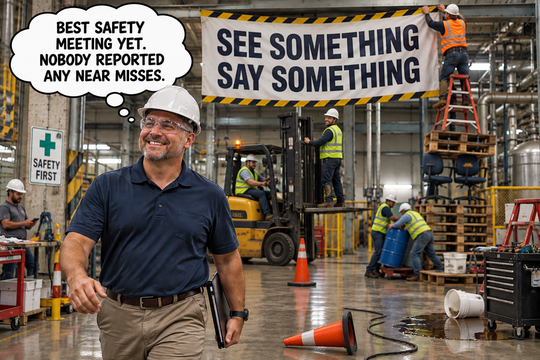
YOUR SAFETY CULTURE
Your audits look fine, but near-misses go unreported and people stay quiet when production is behind.
How We Help:
Whether it's a new system, a reorg, or an acquisition, we help your people through it so the new way sticks.
HOW YOUR LEADERS LEAD
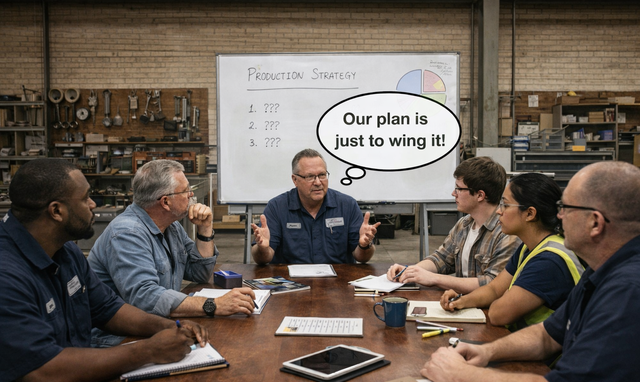
You promoted your best operator to supervisor. Their leadership training was a radio and a set of keys.
How We Help:
We teach new and experienced supervisors how to lead people, hold the standard, and develop the next layer.
A MAJOR CHANGE
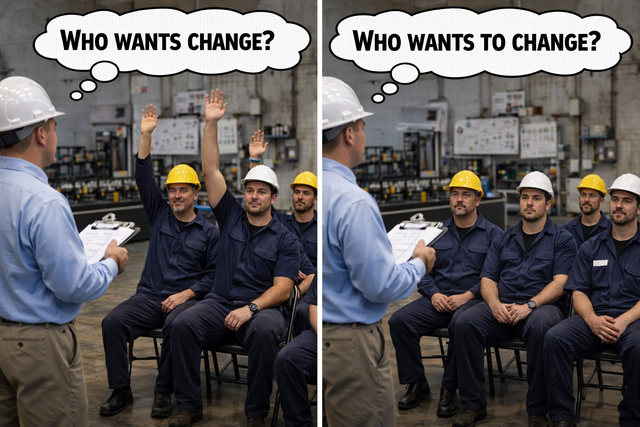
Your go-live went great. Six months later, everyone is back to the old way.
How We Help:
Whether it's a new system, a reorg, or an acquisition, we help your people through it so the new way sticks.
WHAT YOUR PEOPLE CAN DO
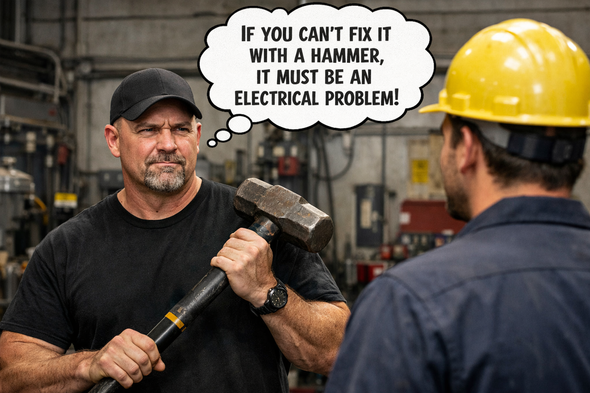
Three people know how to start up the unit. Two of them are on vacation.
How We Help:
We build the skills your operation depends on through structured training, stronger internal trainers, and real troubleshooting practice. That way the know-how doesn't sit with a few people.
WHAT YOUR PEOPLE CAN DO
HOW THE WORK GETS DONE
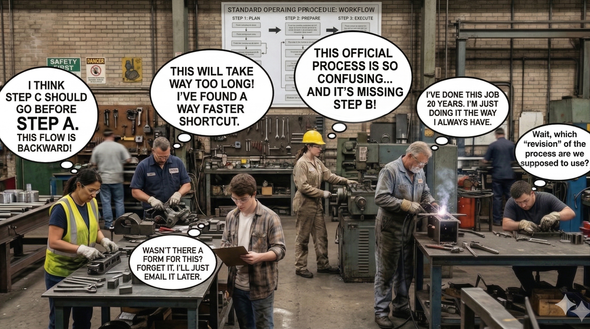
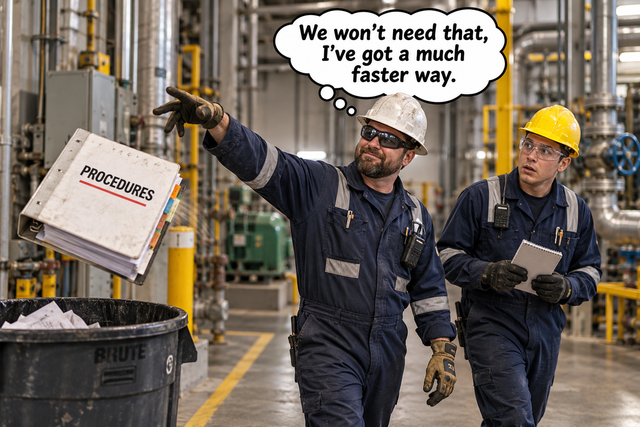
The procedures say one thing, the floor does another, and the same problems keep coming back.
How We Help:
We bring your operators and leaders together to close the gap between the written way and the real way, and to fix recurring problems at the root.
YOUR TRAINING
Your training plan is whoever's on shift that day. Joe teaches it one way, and the next trainer teaches it another...shortcuts included.
How We Help:
We turn your experts into trainers with a plan: clear standards, practical tools, and one consistent way to teach the job on every shift.
WHY ISOMERICS?
1. Built from inside the plant.
Isomerics was built by people who spent more than twenty years inside plants, commissioning units, running training programs, and leading crews. We know what a production floor looks like at 2 a.m., and we design our work for it.
2. Change management is rolled into everything we do.
When a new system, reorg, acquisition, or AI rollout is the job, we run the full change effort, from readiness and communication through adoption and reinforcement. When you hire us for leadership development, safety culture, or a training build, the same discipline comes with it. We plan for who's affected, where the pushback will come from, and how the new behavior gets reinforced after we leave.
3. We understand leadership that never clocks out.
Most leadership training was built for an office that empties at five. Your supervisors lead alone on nights and weekends, with no manager down the hall. Standards have to hold through shift handoffs, overtime, and crews that rarely see each other. The decisions that matter often get made at 2 a.m. by whoever is on shift. We build leadership for those conditions, and we schedule our work around your shifts, turnarounds, and production.
4. We agree up front on what success looks like.
Solving the problem is only part of the job. You'll want to know whether the work paid off. Before we start, we ask what it needs to accomplish: less rework, fewer incidents, lower turnover, new operators qualified sooner, or adoption that holds. We set a baseline together and track both the results and the behaviors behind them, so you can see what changed and what the work contributed.
5. We solve for behavior.
Efficiency programs map the ideal process on paper and assume people will follow it. When it doesn't fit the real work, people work around it and the gains fade. We start with how your people actually work, so the improvement holds.
JUST PUBLISHED!
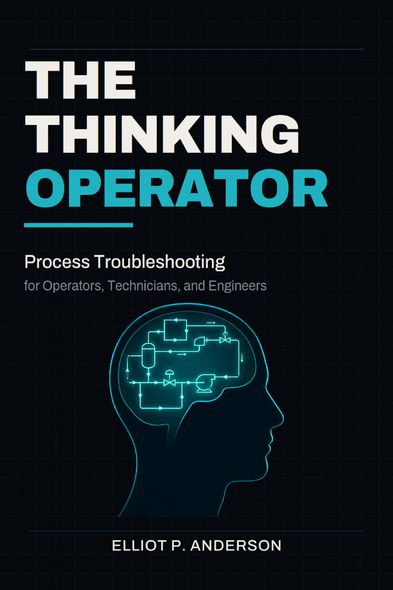
"The Thinking Operator" book
We're proud to share the first book from Isomerics founder Elliot Anderson, now available on Amazon.
A reading climbs and an alarm comes in, often with the unit still running. What happens next depends on how well your operator can think through the problem.
The Thinking Operator is a field-tested method for process troubleshooting. It walks operators through the full sequence: notice the deviation, find what started it, narrow the causes, test before committing, and act safely.
Written for operators, board operators, maintenance technicians, and engineers in chemical, refining, and process plants.
24/7 Always-on Leadership Experience
We work across industrial, manufacturing, and healthcare — because the problem is the same in all three. Different uniforms. Same leadership gaps. Same culture problems. Same ownership failures. Working across all three environments means we deliver solutions that have been tested in multiple contexts — and we know which ones actually transfer and which ones don't.
The reality of always-on leadership
Most leadership development is either feel-good theory or was built for Monday morning at the office. Not 2am on a production floor, control room, or patient unit. Most consultants have never worked those hours. Isomerics has — and that's the difference between solutions that look good in a boardroom and ones that actually hold up on the floor.